Making AI useful in everyday work
The best AI features do not ask people to change how they work for technology. They remove friction from tasks people already need to do.
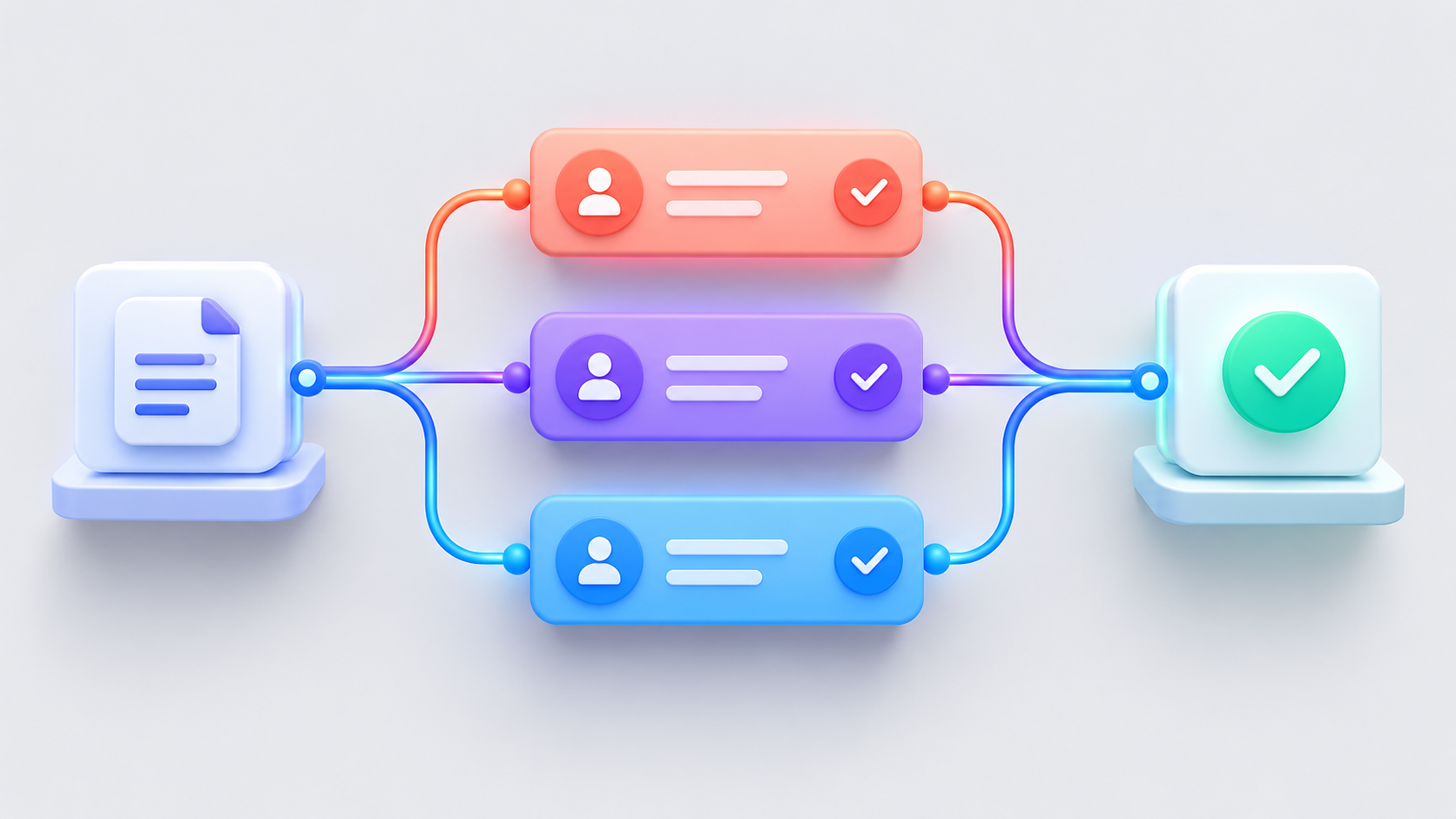
AI can make a real difference when it helps someone finish a familiar task with less effort. That might mean finding the right information, preparing a first draft or bringing the next useful action into view.
Start with the workflow, not the model
Look for repeated work that takes attention away from higher-value decisions. Reading and sorting a hundred resumes is a good example. Then ask whether an AI capability can make that step faster without making the result harder to trust.
If you cannot describe the task in one sentence, it is probably not ready for automation yet.
The question is not "where can we use AI?" It is "which task do people wish they never had to do again?"
Keep people in control
Explain where generated suggestions come from, make them easy to review or correct, and give people a straightforward path when the system is unsure. A confident wrong answer does more damage than a clear "I don’t know".
Measure the outcome
Useful AI is measured by the quality of the outcome and the confidence of the people using it. Start with one clear need, learn from real use and expand only when the value is there.
If you only remember three things
- Pick one repetitive task with a clear definition of done.
- Make every suggestion easy to check and correct.
- Grow the feature only when people trust the results.
 See it in practice · SkilltasyFaster placements with an ATS that reads resumesRead the case study